Tuesday, August 02, 2016

An apology to Rob Ford

By West Annex News (Flickr: Rob_Ford_in_David_Pecaut_Square) [CC BY-SA 2.0 (http://creativecommons.org/licenses/by-sa/2.0)], via Wikimedia Commons
By West Annex News
(Wikimedia Commons)
Rob, if you can hear me... sorry.

Earlier in this election, I compared the brash populism of Donald Trump to the populism of Rob Ford. At the time, the comparison seemed to make sense. Rob Ford had, and "Ford nation" still has, the same sort of supporters who turn out for Donald Trump: lower income individuals who have trouble getting ahead and who see, often correctly, that people who know the secret handshake get breaks from governments the rest of us do not.

But I don't for a second believe Rob Ford would ever have treated the Khans the way Donald Trump treated them, making insinuations about Mrs. Khan's silence as she stood by her husband, or fatuously insisting the "sacrifices" he made to get rich compared with those of the Khans.

By Gage Skidmore https://www.flickr.com/photos/gageskidmore/ [CC BY-SA 2.0 (http://creativecommons.org/licenses/by-sa/2.0)], via Wikimedia Commons
By Gage Skidmore 
(Wikimedia Commons)
When I asked myself how Rob Ford would have responded to Khizr Khan's speech, it occurred to me: Rob Ford would have called the Khans. He would have talked to them. Rob always called people who disagreed with him. He would have listened the he Khans. He would have expressed sympathy with their sacrifice. He would probably not have changed any of his positions, but he would have given the Khans the courtesy of a hearing.

All Rob Ford's most vehement opponents, which some
times included me, acknowledged his ability as a retail politician. He listened to people, and whether he agreed with us or not he gave the impression he cared what we thought. I think he genuinely did; I think he had a real desire to help and connect with people, and unlike Donald Trump, he did not respond to opposition with the fury of wounded vanity.

I had the experience of watching Rob Ford as mayor and as councilor. Mr. Trump, you're no Rob Ford.

An inadvertent Faustian bargain for cyclists?

The Ontario Highway Traffic Act says that cyclists have to ride in the right hand lane, but does not specify a position. It also requires motorists to pass cyclists with at least a meter of clearance. At the same time, it says that when passed, cyclists must move over and allow the overtaking vehicle to proceed. The law makes it unclear whether the cyclists must, as another part of the section on passing states, leave no more than half the road free, or whether the cyclist must move over regardless.

In the United States, the Uniform Vehicle Code, published by the National Committee on Uniform Traffic Laws and Ordinances in 2000, says the following:
(a) Any person operating a bicycle... at less than the normal speed of traffic... shall ride as close as practicable to the right-hand curb or edge of the roadway except.... When overtaking and passing another bicycle or vehicle.... When preparing for a left turn.... When reasonably necessary to avoid conditions' including but not limited to: fixed or moving objects; parked or moving vehicles; bicycles; pedestrians; animals; surface hazards; or.... a lane that is too narrow for a bicycle and a motor vehicle to travel safely side by side..... When riding in the right-turn-only lane.
In both cases, the law manages to say the bicycles should ride in the right hand lane and ride, or give way, to the right side of the road, except when they shouldn't. Conversely, cyclists can take the lane, when allowed to, under certain conditions.

For the past three decades, laws, practices and attitudes have evolved under pressure from environmentalists and cyclists. For much of that time, various people with an emotional or an economic stake in the current heavily motorized transportation system have attempted to resist this process. Laws in the process of change inevitably contain contradictory and unclear segments, as the legislature changes laws piecemeal.

As different legislatures change laws differently, it makes sense to expect the laws will evolve differently. In this case, the laws in very different jurisdictions have changed to the same effect: they all acknowledge the right of cyclists to take the lane where safety requires it, but they do so ambiguously. In all cases the application of the law depends on a judgement; in the case of the Ontario law, it requires a judgement about what the law means.In the case of the Uniform Vehicle code, a cyclists's right to take the lane depends on whether conditions require it; again, a matter of assessment.

The laws in Ontario and elsewhere have taken a particular shape: articulate cyclists with considerable personal resources, of the sort who tend to lead legislative campaigns, can take the lane with some confidence the courts will uphold, or at least permit, their actions. Meanwhile, the laws retain enough ambiguity to permit the police to push cyclists without the resources or time to study the law or prevail in court to the side of the road. I do not consider this a compromise cyclists should or can accept. As long as cyclists' right to ride in safety remains subject to ambiguities in the law, then some of us do not have the right to take the lane, which means none of us really do.

At a minimum, this means we haven't won the battle for the right to cycle, safely, and to choose the best road position. We need to say so. We need to keep pushing governments to remove all the qualifications in the law regarding our right to the road.

Saturday, July 30, 2016

Another comment on Black Lives Matter

By Fibonacci Blue from Minnesota, USA (Protesters gather for Black Lives Matter march) [CC BY 2.0 (http://creativecommons.org/licenses/by/2.0)], via Wikimedia Commons
By Fibonacci Blue (Wikimedia Commons)
Six months ago, Chris Lollie settled a lawsuit against the City of St. Paul Minnesota and the police department of that city. In response to a complaint by a private security guard that Mr. Lollie had sat in the wrong chair in an area open to the public, the police shocked him using an electric discharge device and arrested him.The courts first dismissed all the charges the police laid against Mr. Lollie, and subsequently cleared the way for his suit to go forward. At that point, to avoid the possibility of a larger damage award the city settled, although to the credit of the councilors who made the decision, they also considered the police had done wrong. As a member of council said: "I want to see our city make national news for many things. And this is not one of them."

Mr. Lollie took a cell phone video of his arrest, and the release of the video, as well as the subsequent discussion, took place just as the police shooting of Michael Brown in Ferguson MO came to international attention. Seeing the way the police treated Mr. Lollie, and discussing his arrest, led me to see the phrase Black Lives Matter as not simply the self-evident truth that the police should not shoot people with black skin, but that Black people have a right to live a full and whole life, lived in dignity, freedom, with a sense of possibility. I do not see Black Lives matter simply as a not shooting, but as upholding the dignity of the person.

Sunday, July 24, 2016

To my American friends..

Clinton at Planned Parenthood (cropped) By Lorie Shaull (Own work) [CC BY-SA 4.0 (http://creativecommons.org/licenses/by-sa/4.0)], via Wikimedia Commons
photo Lorie Shaull (Wikimedia)
From social media, I get a strong sense that some of you feel a deep and abiding disappointment about Democrat primary voters going for the "establishment" candidate, Hillary Clinton.

I don't normally like to tell voters in another country whom they should elect, but one thing makes the United States a special case: the largest thermonuclear arsenal on the planet. All voters, everywhere, vote for the people they think will do the best job for themselves, their children, and the unborn generations to come. When Americans vote to decide whom they will hand the keys of a 6,000+ megaton nuclear arsenal, they also vote on behalf of the 95% of people on Earth who do not get a vote in American elections, but can still die in a nuclear war.

Wednesday, July 20, 2016

How not to argue for the rights of cyclists

When cycling on streets and roads where motorists may have permission to operate their vehicles, cyclists have the right to decide our lane positions for ourselves. Human vision has a narrow acute range: the optimum resolution of our eyes covers just a few degrees. To cope with this limit, aviators train to scan the sky in small sections; without this training, surface motor vehicle operators focus on the road in front of the vehicle. Cyclists occupying the center of the lane have the best chance motorists will see and avoid us. Visibility plays a particularly critical role at intersections, and there cyclists riding to the side have the greatest chance of coming into conflict with motor vehicles.

There you have the safety case for cyclists riding in the center of the lane. It exists in tension with another safety imperative: separating traffic operating at different speeds, to avoid the need for sudden changes in speed and to minimize the consequences of an impact. Those two hazards: getting sideswiped by a driver passing too close and getting hit by a driver who sees us too late define the choices for cyclists. Taking all the risks and the known limits of drivers into account, it makes a lot of sense for cyclists to ride in the center of the lane when we don't have, at minimum, an adequate bicycle lane, and, preferably, a protected bike lane. Most of us who ride in North America can't count on bike lanes every where we go, or even most of the places we go. Most of us need to take the lane, and taking the lane serves us best when we do it without fear and without apology. At an absolute minimum, cyclists have, and ought to vigorously defend, a right to make our own choices about where in the lane to ride.


I ride in the center of the lane because I consider it safer. That covers it in three words: I consider it safer. John Forester and some of his supporters clutter the issue with irrelevant and frankly offensive detours from the single objective that matters: getting everyone from point 'A' to point 'B' alive and uninjured, notwithstanding the presence of two-tonne steel bombs.

Friday, July 15, 2016

#blacklivesmatter vs. #alllivesmatter: a different perspective

By Fibonacci Blue from Minnesota, USA
[CC BY 2.0 (http://creativecommons.org/licenses/by/2.0)],
 via Wikimedia Commons
To judge by my facebook feed, just about everyone I know who forwards thoughts about the original #blacklivesmatter and the rejoinder #alllivesmatter see the difference as one of urgency. The vast majority of comments I read use an analogy of a building on fire or a child who got left out at dinner. By this analogy, black lives don't matter more, but black people, at least in the American context, have a more urgent need for justice right now.

I agree with this analogy, but I can see other ways of looking at the issue as well. A hashtag, after all, has some flexibility; we can see it in many different ways. And by seeing the hashtag #blacklivesmatter in a slightly different way, I have also come to see the problem with the attempted retort #alllivesmatter in a different way as well.

Imagine the hashtag #blacklivesmatter, not as a plea or as a proposition. Imagine it as a simple statement that we all long ago signed onto. In this light, the hashtag contains an accusation: the lives of Black people matter; you know it, I know it, we all know it, but our society, and particularly our justice system do not act according to our understanding. The power of the #blacklivesmatter hashtag stems from our recognition that our actions and the behaviour of our institutions do not reflect our stated ethics: therefore, #alllivesmatter will always embody a weak response, a feeble denial. Simply acknowledging the phrase "black lives matter" as a statement that calls for a response shows that at some level those who respond understand the problem exists. If black lives matter did not call our attention to a real problem, we would respond with "of course", rather than with "all lives matter".

Thursday, June 16, 2016

Pulse nightclub Orlando. Rest in peace, rise in glory

Stanley Almodovar III, Amanda Alvear, Oscar A Aracena-Montero, Rodolfo Ayala-Ayala, Antonio Davon Brown, Darryl Roman Burt II, Angel L. Candelario-Padro, Juan Chevez-Martinez, Luis Daniel Conde, Cory James Connell, Tevin Eugene Crosby, Deonka Deidra Drayton, Simon Adrian Carrillo Fernandez, Leroy Valentin Fernandez, Mercedez Marisol Flores, Peter O. Gonzalez-Cruz, Juan Ramon Guerrero, Paul Terrell Henry, Frank Hernandez, Miguel Angel Honorato, Javier Jorge-Reyes, Jason Benjamin Josaphat, Eddie Jamoldroy Justice, Anthony Luis Laureanodisla, Christopher Andrew Leinonen, Alejandro Barrios Martinez, Brenda Lee Marquez McCool, Gilberto Ramon Silva Menendez, Kimberly Morris, Akyra Monet Murray, Luis Omar Ocasio-Capo, Geraldo A. Ortiz-Jimenez, Eric Ivan Ortiz-Rivera, Joel Rayon Paniagua, Jean Carlos Mendez Perez, Enrique L. Rios, Jr., Jean C. Nives Rodriguez, Xavier Emmanuel Serrano Rosado, Christopher Joseph Sanfeliz, Yilmary Rodriguez Solivan, Edward Sotomayor Jr., Shane Evan Tomlinson, Martin Benitez Torres, Jonathan Antonio Camuy Vega, Juan P. Rivera Velazquez, Luis S. Vielma, Franky Jimmy Dejesus Velazquez, Luis Daniel Wilson-Leon, Jerald Arthur Wright

Editing the list of names of people killed at Pulse nightclub in Orlando last Saturday brought home to me how long a list of names forty-nine victims makes.

Wednesday, June 15, 2016

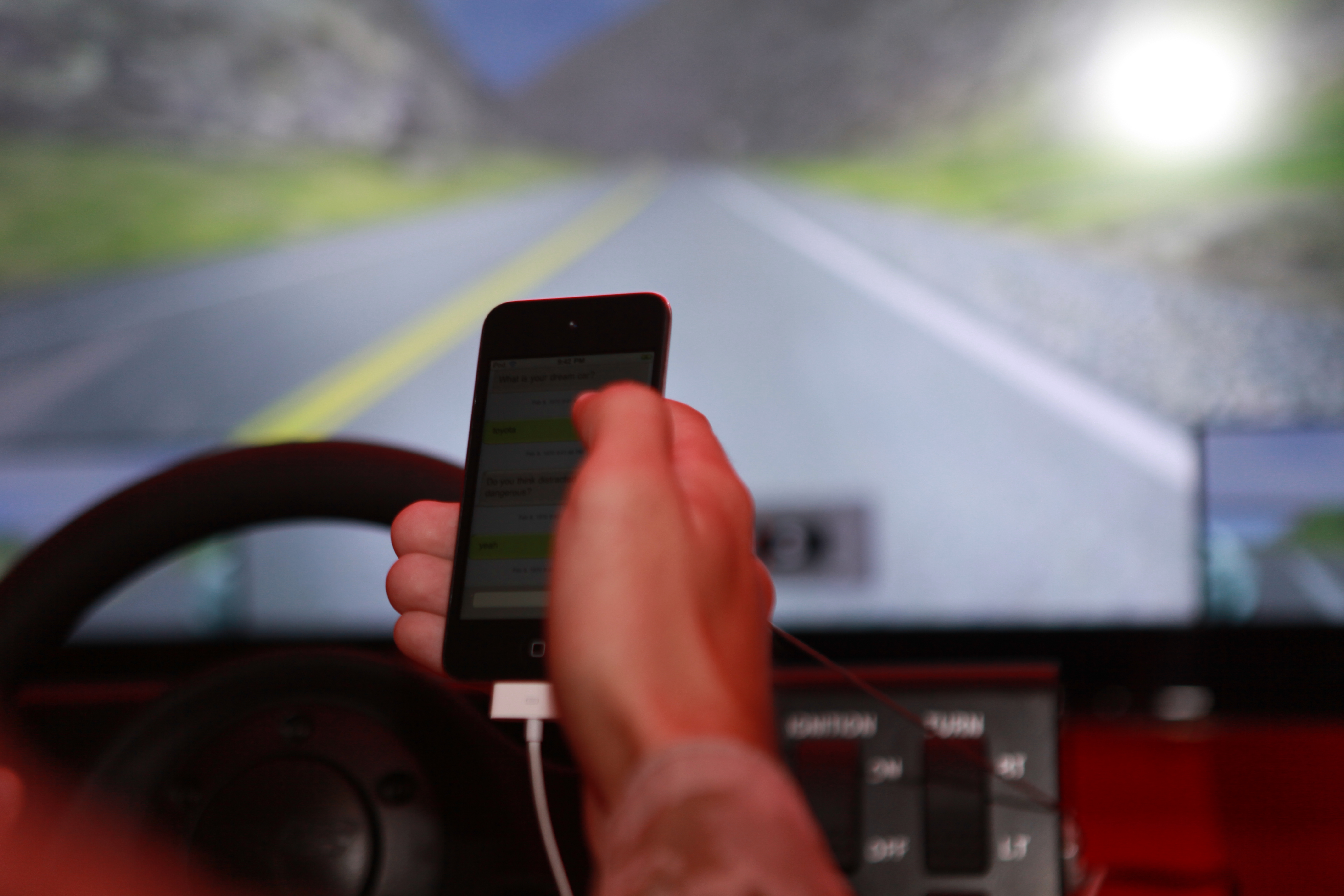
Would simplifying the laws help?


 A participant tests a text-while-driving simulator at the
Distracted Driving event aboard Marine Corps
Air Station Miramar, Calif., Nov. 4.
Ontario has a the provincial law on distracted driving. What would happen if we repealed it? The criminal code of Canada already has a section (249) prohibiting the operation of a powered vehicle or aircraft in a manner that endangers the public. Does anyone not think tooling down the road while taking a selfie, texting, or talking on a hand-held device endangers the public? Creating a special category of "distracted driving" allowed the legislature to create special (specially lenient) penalties. Dangerous driving carries a maximum sentence of five years in prison. Distracted driving carries a maximum sentence of a thousand dollar fine and three points on your license. The real distinction, however, kicks in if a distracted driver kills someone. Provincial laws do not increase the penalties for driving offences when a death or bodily harm results. If the province didn't have specific legislation on distracted driving, but rather a regulation requiring prosecutors to pursue charges of dangerous driving against distracted drivers, driving into someone and killing them while answering a text could mean up to a up to fourteen years in prison.

Section 252 of the criminal code of Canada prescribes penalties for leaving the scene of an accident. What if we replaced it by a law that made it a criminal offence to hit someone with a vehicle and injure or kill them? The law could allow drivers to present, as an affirmative defence, that they had operated according to the law and prudently given the conditions, and that the crash came about because of factors they could not control. A driver who left the scene of the crash would only escape criminal liability if they could escape detection indefinitely. Drivers who left the scene of a fatal crash would find it impossible to explain their behaviour, and the courts would convict and sentence them for the essential offence: killing someone with a motor vehicle.

Legal simplification only works if the courts will apply common sense when enforcing the law. It makes sense that when manually controlling an automobile that covers twenty meters every second, a person taking their eyes and concentration of the road for the thee seconds it takes to send a text endangers everyone within sixty meters, but how many dangerous driving charges did the police lay against texting drivers before the province passed the distracted driving law?

As long as we stay with the social convention that we will never require drivers to apply even the most rudimentary logic, that no act behind the wheel violates the law unless the law specifically prohibits it and a police officer witnesses it, we will always need more and more detailed laws. The penalties these laws prescribe will always fall between the need to deter and denounce truly dangerous behaviour, and the impulse to keep motoring available for everyone. We have to live with that situation, at least for now, but that does not mean we should accept it. In principle, fewer laws, backed by a social and legal consensus that we need not pay our road tolls in blood and that we ought not to condone behaviour that endangers other people, would serve us much better.

Monday, May 09, 2016

The heart of the matter

In a previous post, I wrote about the so-called "Overton window": the conviction that policy proposals have a simple linear value; that setting them out, ordered, on a line makes it possible to define a range, or a set defined in linear order from a minimum to a maximum value (the "window") that opinion makers empowered to do so will deem acceptable.

This linear view has no relation to the complicated reality of politics. Using it distorts and even corrupts approaches to politics in many ways: ultimately, treating politics as symbols with single ordinal values offers considerable scope for attempts to control the process.


Saturday, May 07, 2016

Daniel Berrigan, presente

Conventional movies have contained few genuinely moving, as opposed to sentimental moments. One of the most moving occurred at the beginning of the film The Mission with Jeremy Irons, a story of the involvement of the Jesuits with the Guarani people. Near the beginning of the film, three Jesuits walk toward the viewer coming over a rocky knoll. Two of these are actors dressed as Jesuits: the third is Dan Berrigan.
By Thomas Good GFDL

While protests against the American Imperium and its exploitation and war would inevitably have arisen, Dan Berrigan had a profound influence on the shape they took. His embrace of a non-violent, ethically based resistance to war and domination helped inspire activist movements of the past generation. He followed the example of Jesus, whose ministry, by the world's standards, ended in the utter failure and disgrace of the cross. By separating the pursuit of truth and ethics from fame, from success, from power, Dan Berrigan helped create a movement that political defeat could not stop and that darkness could not stifle.

He is at peace now. Let light perpetual shine upon him. Let us who remain continue the great work he has nobly advanced.

Politics through the window (please, just not Windows 10...)

Politics, as an art, a practice, and discipline and a commitment has one real purpose: to make good policies for the peace, welfare, and just ordering of the polity. Politics aims to find solutions that allow us, as disparate, imperfect people, to live good lives together in a functioning community.

It also makes for terrific theatre.

Wednesday, May 04, 2016

Wait, what?

It looks like we started a trend.

Just over a week and a half ago, a driver came up Jane Street in West Toronto and managed to jump the curb and hit a small apartment building. The force of the crash threw the engine block halfway across the street, and shrapnel sprayed the fronts of buildings 15 meters away from the crash site, denting window mouldings and chipping stucco. The passenger of the car died, the collision damage made the building unstable and the city evacuated the residents.

One collision such as that makes sense: freak accidents happen. Then, a little less than a week later, another driver crashed into a convenience store at Harbord and Bathurst, in the middle of Toronto's downtown.

Just this week,  someone else drove an SUV into a building in the Beach, a neighbourhood in the city's east end. This time, the crash killed an occupant of the building: an elderly woman preparing for a morning dance class.

Really, Toronto motorists? Seriously? I get that some things come in epidemics, but driving cars into buildings? Some people really need to ditch the car or the truck and start riding a bus.

Tuesday, May 03, 2016

A betrayal wrapped in an oxymoron

By Gage Skidmore (Flickr.com) CC BY-SA 2.0, via Wikimedia Commons
By running for president of the United States, Donald Trump has exposed a good many open wounds. The phrase used to describe one of these sums it up succinctly, but not neatly. Like origami, the concept opens into multiple dimensions; the more you pull on it, the more it reveals. White working class: suddenly, the phrase appears in everyone's articles, an all purpose location for the appeal of one Donald Trump, and much more beside.

The phrase explains without explaining; it explains not in the sense that the words themselves carry meaning, but in the sense that the words "white working class" serve to trace the lines of deep scars or unhealed fractures in our society. Start with the word order: the white working class. The syntax suggests a single mass, like a vast white shag carpet covering several American states. The opposite phrase, working class African Americans, suggests a single description applicable to multiple individuals. Specifically, the phrase speaks of African Americans who belong to the working class, people who work for wages and who need to work for wages to support themselves. Working class African Americans also belong to a larger set: the working class generally, made up of people of all ethnic varieties, all nationalities. The phrase white working class, on the other hand, completes a definition not of multiple persons but, somehow, a single phenomenon.

Monday, May 02, 2016

Seven reasons to want more people cycling

Every cyclist should want more people to get on a bike. Wherever, however, whenever you cycle, you should welcome two-wheeled, human powered company on the road. The reasons for wanting more cyclists include:

  1. More cyclists means a healthier society. A huge body of evidence indicates that using a bicycle for transportation on a regular basis adds as much as two years to the average life span.
  2. More cyclists means a happier society. Regular activity counters depression.
  3. More cyclists means a smarter society. Regular physical activity, including cycling, improves alertness.
  4. More cyclists means less local pollution from cars.
  5. More cyclists means more provision for cyclists: everything from more bicycle parking to bicycle racks on buses.
  6. More cyclists means motor vehicle operators expect cyclists, look for cyclists, adapt their behaviour to account for the presence of cyclists on the roads.
  7. More cyclists cut into the sense of immunity that many motorists expect. In a community where the vast majority of people commute to work, leisure, shopping and even the gym by car, motorists know that other motorists will investigate and adjudicate any crash they get into. In a community where cycling plays an important role in transport, the motorist can expect that at least some of those who judge their behaviour will have no sympathy with those who choose to operate motor vehicles unsafely.

From error to error

A concerned student at University of Missouri
Photo by Mark Schierbecker (Own work)
via Wikimedia commons CC BY-SA 4.0 
Rod Dreher recently posted a web log entry in which he noted that the University of Missouri has fallen on some hard times. He attributes that to what he calls "craven appeasement" by the university of the protests that broke out at the university last fall. Mr. Dreher notably repeats the word "appeasement" twice and "cowardice" once, but does not allude to right or wrong, either in the ethical or the practical sense. He attacks the university, in other words, simply for an abstraction: abdicating authority.

The original charge of appeasement had a moral basis: the conviction, horrifyingly proved correct by subsequent events, of the wickedness of Hitler and the Nazi regime. At least in the case of the Munich agreement, the betrayal of the Czechoslovakian democracy compounded the immorality of appeasing Hitler. Whatever your opinion of the University of Missouri administrators, they did not commit anything like appeasement in this sense. If anything, the record of offences weighs against the powers that be of Missouri: whatever their faults, the student protesters do not carry the moral weight of one of the most inhumane slave economies on record, or of a terror state designed to keep African Americans "in their place". Nor did the protesters invent the carceral culture that has millions of Americans locked up for ideology and profit. Indeed, their protests against this plunder represent a genuine hope for renewing the American project.

Sunday, April 10, 2016

Grace notes and missed opportunities

Rob Ford has died. Rest in peace.

After a pause, a very brief pause, in the interests of decency, the negative assessments of Rob Ford's performance as mayor have started. And indeed, Rob Ford's tenure in the mayor's office was a disaster, most of all for Rob Ford. Edward Keenan's got it mostly right. Heck, nearly everybody has it right. Rob Ford's talents, his outlook, did not match the skills and the perspective a mayor needs.

Rob Ford believed in servant government. Politicians should believe in servant government. If more politicians really wanted to serve the people, instead of socking away money in off-shore tax havens, we wouldn't just have better government, we'd have a better world. Rob Ford wanted to solve people's problems. He wanted to serve as the kindly scullery maid handing leftovers out the back door. He wanted to answer phone calls and get potholes filled. Despite his lapses, he did a good job as a councillor.

Tuesday, April 05, 2016

Four words closer to the safety of life

In one of his more recent screeds against cycling, Jim Kenzie, the Star's car reviewer, wrote this chilling sentence: "We still kill more pedestrians and motorists on Toronto roads than we do cyclists."

We shouldn't kill anybody. I'll say that again: we shouldn't kill anyone. We should never accept death as a price for anything. Any violent death, any injury, in the course of any activity means that something went wrong and needs correction. When it comes to automotive technology, and the million odd deaths it causes world-wide, we need to do a lot of correcting. We need a safety culture.

The safety cultures I know best, marine and aviation, have four defining principles, summed up in four words: priority, transparency, authority, and accountability.

Start with priority, as in the safety of life has absolute priority. Nothing trumps the word unsafe. Not convenient, not fast, not efficient, not cost-effective. Having a deadline does not justify an unsafe act. Money does not justify a lack of safety.

Saturday, January 09, 2016

Theology as Logos...

The American eangelical school Wheaton College has apparently decided to fire one of their professors, Dr. Larycia Hawkins for stating that Christians and Muslims pray to the same G-d. Wheaton claims that this statement violates their profession of faith, which the institution requires all staff and students to assent to. The institution has come in for criticism: some strong, and some balanced between support and criticism. Some of the support they have received makes specific reference to the need for institutions of learning committed to a specific viewpoint to ensure all the scholars adhere to that viewpoint; to, as Rod Dreher's comments put it, "police their theological boundaries". Whatever the value of setting limits to enquiry in a religious school, doing so carries a risk: that the school may end up enforcing an logically contradictory position. You can't alter a logical conclusion by firing someone for following it.

Start with an element of basic Christian theology: G-d as universal, the Creator of all things. We know (and can prove) that by its very Nature language does not and cannot encompass the universal (Gödel's proof). Therefore, as Paul (1 Corinthians 13:12) says:
...now we see in a mirror, dimly, but then we will see face to face. Now I know only in part; then I will know fully, even as I have been fully known.
It therefore follows that if we pray to G-d simply as we conceive G-d to be, we necessarily pray to an incomplete idea of G-d. As  C. S. Lewis put it, we must, logically, pray to G-d as G-d knows G-d's self to be. If we do this in humility, acknowledging our inadequacy to fully conceive of G-d but directing our worship to the great "I am" (Exodus 3:14), and if Muslims do the same, then they and we necessarily pray to the same G-d. And if we do not, if we pray to our conception of G-d, then we can only hope in humility for G-d to bridge the inevitable gap between the limited concepts in our minds and the transcendent reality. And if Muslims do the same, do we dare ask that G-d not grant them the same mercy?

Friday, December 25, 2015

All I want for Christmas...

is a safety culture on Ontario's streets, roads and highways. And some respect for vulnerable road users would be good, too.

Thursday, December 24, 2015

These aren't the droids you're looking for -- and by the way, this is the best movie ever

It's probably just me, but somehow the rave reviews for "The Force Awakens" have a whiff of jedi mind tricks about them. It's not that it's a truly bad movie. Certainly, if you compare it with "Phantom Menace", it's a real accomplishment. But it's been called the best movie of the year, which seems just a little excessive in a year that saw the release of "Room" and "Spotlight".

For those who go to movies looking for spectacle, "The Force Awakens" delivers. For those who want to see plot twists, this movie will more than satisfy. If you want to see moments of convincing acting between the explosions, it comes across as well. For those who want to see truly coherent, truly excellent writing: see "Spotlight", or see "Room".

In his book "The Empty Space", the great English theatre director Peter Brook wrote about the disconnection between plays that described inner lives and plays that addressed the great sweep of world events. Brook points to the Elizabethan theatre as proof that writers could address both interior thoughts and feelings and world events, exposing the conflicts and interactions between the fears and hopes of individuals and the great events of the world. Perhaps Star Wars aims to do the same thing on a mythic scale, but it misfires badly.Star Wars has a red shirt problem. The first movie of the series, in 1977, began with the destruction of the planet Alderan.

All story-telling risks a kind of narcissism: telling a story inevitably means telling it from a particular point of view, and the listeners come to understand, and to that extent sympathise with, that view. Some story-tellers resist, making a conscious effort to remind their hearers that people outside the circle of the story also matter. Other storytellers happily capitulate to the limits of the form, even turning effect into ideology. Star Wars explicitly defines some of its characters as "chosen", some as auxiliaries placed by fate in the orbit of the chosen, and the vast majority as grist for the cosmic grinder. But this juxtaposition of the few who matter with the many who do not creates jarring inconsistencies in the heart of the story. At the end of Return of the Jedi, the film clearly presents Annakin Skywalker as fulfilled and redeemed, together with Obi-wan and Yoda which leaves the audience to wonder where in that afterlife the inhabitants of Alderan have got to.  "The Force Awakens" does not change this; it doubles down on the anonymous slaughter.

The problems with "The Force Awakens" start with, well, the force. An invisible, quasi-religious and very loosely defined principle associated with a set of abilities, mostly telepathy, the ability to manipulate others, and telekinesis, the Start Wars movies describe it as a grace somehow passed on by heredity. The force, in fact, provides a continual deus ex machina for the series, and particularly for the current film. The film depicts one of the principal characters as a scavenger, scratching out a subsistence living selling parts scavenged from the debris of space battles of a generation ago to an exploitative and oppressive junk dealer. Yet this character goes on to display excellent piloting and combat skills, skills that take decades to master and in fact act as the hallmarks of military aristocracy. Who taught this character these skills? Why would they? It should not surprise any viewer that the film makes it abundantly clear that the force is strong in this one. The films express a vision of profound inequality, and "The Force Awakens" does not change this.

Some of the best works of literature and drama to describe great historical events and movements have done so from the point of view of a random participant, as "Casablanca" tells the story of the Second World War, or from the point of view of the victims, as "One Day in the Life of Ivan Denisovich" or "Johnny Got His Gun" do. The protagonists of these stories represent the millions of people who went through the same experiences. Other accounts tell the story of major events from the point of view of people who happened to make specific decisions that had a profound impact. The choice of protagonist matters, and in Star Wars, the choice of protagonists, by an impersonal blessing from the universe passed on in the family line, contradicts the ostensible theme of the series, the struggle to preserve, then the struggle to restore, then the struggle to maintain a democratic state. The writers of Star Wars do not manage this tension well. "The Force Awakens" is spectacular; it has good acting between the blasts, but it does not tell a compelling story.